SciSure blog

Posts by:

Admin

Introducing ASCENSCIA: The voice assistant designed for scientists

ASCENSCIA is your voice assistant in the lab, specifically designed for scientists by scientists. It essentially functions as your companion, providing an easy way to access information and record data while working in the lab, freeing up your hands and allowing you to focus on your experiment.

The digitisation of scientific laboratories is ongoing and often challenging. One hurdle scientists face is staying connected with their electronic lab notebooks (ELNs) from the bench. With multiple experiments to perform and data to record, multitasking can lead to wasted time and valuable research information being lost. However, the emergence of voice assistant technology developed by ASCENSCIA for scientists offers a solution. The ASCENSCIA voice assistant allows for the hands-free recording of notes and data directly into the eLabNext platform, streamlining the research process and aiding in the complete digitisation of labs. By simplifying daily tasks and eliminating manual note-taking, scientists can focus on their experiments and make the most out of their time in the lab. This technology revolutionises traditional methods, leading to more efficient and accurate scientific research.

Inefficiencies that lead to wasted resources and slow down lab digitisation

Working closely with research labs in academia and industry, we gained insight into the hidden inefficiencies that lead to wasted resources and slow digitisation. Scientists often feel frustrated by their inability to easily access or transfer data, particularly from paper notes to electronic lab notebooks (ELNs). These small obstacles can add up, hindering overall productivity in the lab. Our collaboration with research labs allowed us to identify and quantify these inefficient processes, ultimately leading to the development of the ASCENSCIA voice assistant. For example, addressing disconnected access to electronic lab notebooks and streamlining data transfer from paper notes can save significant amounts of time and improve data quality. In fact, our efforts have increased productivity by 40%, saved researchers up to 30% of the time, and reduced reproducibility issues by 70%.

I believe that this is a very interesting time for the scientific research field, moving towards lab digitization. It is very exciting to work together with partners like eLabNext to accelerate this transformation process.

Ahmed Khalil, Founder & CEO at ASCENSCIA

A fruitful partnership

At ASCENSCIA, we carefully select our partners to ensure that we all work towards the same goals and values. That’s why we chose to align with eLabNext – their mission to digitise scientific laboratories aligns perfectly with ours. Not only that, but their products and services make it easy for us to integrate our voice technology solution into labs. We were thrilled by the enthusiasm and support of the eLabNext team during our partnership explorations – all signs pointing to a successful collaboration. We are excited to see what the future holds for our partnership with eLabNext.

At eLabNext, our mission is to revolutionise life sciences research by building an expansive marketplace of customisable digital lab tools. That's why we're thrilled to announce our partnership with ASCENSCIA, a company dedicated to creating groundbreaking voice assistant technology designed specifically for scientists. By integrating this technology into our platform, we can offer even more options for researchers to streamline their workflows and make thier day-to-day lab tasks easier than ever before. We're excited about the potential this partnership brings and can't wait to see how researchers take advantage of this innovative new tool in their labs.

Lara Matthews, Business Development Manager at eLabNext

About ASCENSCIA

ASCENSCIA is a highly specialised voice assistant for scientific labs. ASCENSCIA can integrate seamlessly with existing databases, systems and machines in the lab, making them smarter by creating voice-enabled labs. Accordingly, scientists can collect data accurately, automate experimental workflows and stay connected to their databases from the lab just by the power of their voice.

We are a team of scientists who know the struggles, challenges and costs of bringing drug therapeutics to the market. Our mission is to shift scientific research towards a more data-driven era. We accelerate early-stage drug discovery research into a more efficient, economical, and sustainable process. Simply, solving the small day-to-day challenges in the lab collectively contributes to the tremendous waste of lab resources. Ultimately, we aim to transform scientific research labs into more data-centric and data-driven.

Sign up for a free trial

Read More

Como a digitização pode otimizar os laboratórios na América Latina

Please scroll down for the English translation

Do caderno de anotações ao software de gerenciamento, a migração do papel ao digital é global, e acontece em todas as áreas.  O investimento em digitização de laboratórios de pesquisa nas universidades, P&D, biotechs ou pequenas empresas possui grande potencial crescimento, no entanto, ainda se encontram em fase inicial. Por que a digitalização está demorando tanto para acontecer na América Latina?

Primeiro, precisamos voltar um pouco no tempo. Em 2019, a pandemia escancarou que muitos ramos da biotecnologia precisavam acelerar a transformação digital, para chegar perto da taxa de desenvolvimento, por exemplo, da indústria de diagnóstico ou farmacêutica.  Além disso, a perspectiva socioeconômica herdada pós-covid não era das melhores. Pequenas empresas foram as mais afetadas e vivenciamos um cenário acentuado e complexo devido as debilidades estruturais existentes na região, reforçando a necessidade de explorar cada vez mais a transformação digital para fortalecer as instituições1.

Como observamos o mercado mais desenvolvido na digitalização é o mercado diagnóstico. Um exemplo é uma das maiores empresas na America Latina, o DASA - Diagnósticos da América S.A. – que investiu milhões para a transformação digital para melhor atendimento ao paciente e redução de custo de operação2. Essa mesma lógica pode se aplicar aos laboratórios de pesquisa, biotechs e statups no Brasil, que também tem sido uma tendência crescente nos últimos anos, com a adoção de tecnologias digitais para aprimorar a coleta, análise, armazenamento e compartilhamento de dados. Hoje, revistas cientificas de relevância exigem o compartilhamento de dados brutos para publicação3 e imagine você conseguir compartilhar com apenas um clique? Ou acessar dados do lab em qualquer lugar do mundo.

Não podemos negar que com a realidade da região sempre teremos que contar com as instabilidades socioeconômica e política gerando inseguranças sobre os investimentos que serão injetados nas universidades e startups. Investir ou planejar o seu projeto considerando soluções de software é uma ação que torna esse ambiente mais sustentável e é essencial para a saúde e manutenção do lab. E que o investimento - conseguido com muito suor - seja aplicado de forma otimizada trazendo maior produtividade e inteligência na utilização de recursos e pessoas e garantindo que os dados e amostras sejam protegidas e armazenadas com segurança.

Você está preparado para abandonar o seu caderno e viver uma nova era?

Referências bibliográficas:

  1. Perspectivas Económicas de América Latina 2020: transformación digital para una mejor reconstrucción
  2. 2022: as contribuições da Dasa para entregar mais saúde aos brasileiros
  3. Nature: Data sharing is the future

How Digitization Can Optimize Laboratories in Latin America

From notebooks to management software, the migration from paper to digital is global, and happening in all areas.  Investment in digitizing research labs in universities, R&D, biotechs or small companies has great growth potential, but is still in its early stages. Why is digitization taking so long to happen in Latin America?

First, we need to go back in time a bit. In 2019, the pandemic made it clear that many branches of biotechnology needed to accelerate their digital transformation, to get close to the development rate of, for example, the diagnostic or pharmaceutical industry.  In addition, the socioeconomic outlook inherited post-covid was not the best. Small businesses were the most affected and we experienced a sharp and complex scenario due to the existing structural weaknesses in the region, reinforcing the need to increasingly exploit digital transformation to strengthen institutions1.

As we have observed the most developed market in digitalization is the diagnostic market. An example is one of the largest companies in Latin America, DASA - Diagnósticos da América S.A. - that has invested millions in digital transformation to improve patient care and reduce operating costs2. This same logic can be applied to research laboratories, biotechs and statups in Brazil, which has also been a growing trend in recent years, with the adoption of digital technologies to improve data collection, analysis, storage and sharing. Today, relevant scientific journals require the sharing of raw data for publication3 and imagine being able to share with just one click? Or access lab data from anywhere in the world.

We cannot deny that with the reality of the region we will always have to reckon with socioeconomic and political instabilities generating insecurity about the investments that will be injected into universities and startups. Investing or planning your project considering software solutions is an action that makes this environment more sustainable and is essential for the health and maintenance of the lab. And that the investment - made with a lot of sweat - is applied in an optimized way, bringing more productivity and intelligence in the use of resources and people, and ensuring that data and samples are protected and stored safely.

Are you ready to abandon your notebook and live a new era?

Read More

Highlights from the Glendale Office Opening Event: Insights and Networking with AI and Biotech Experts

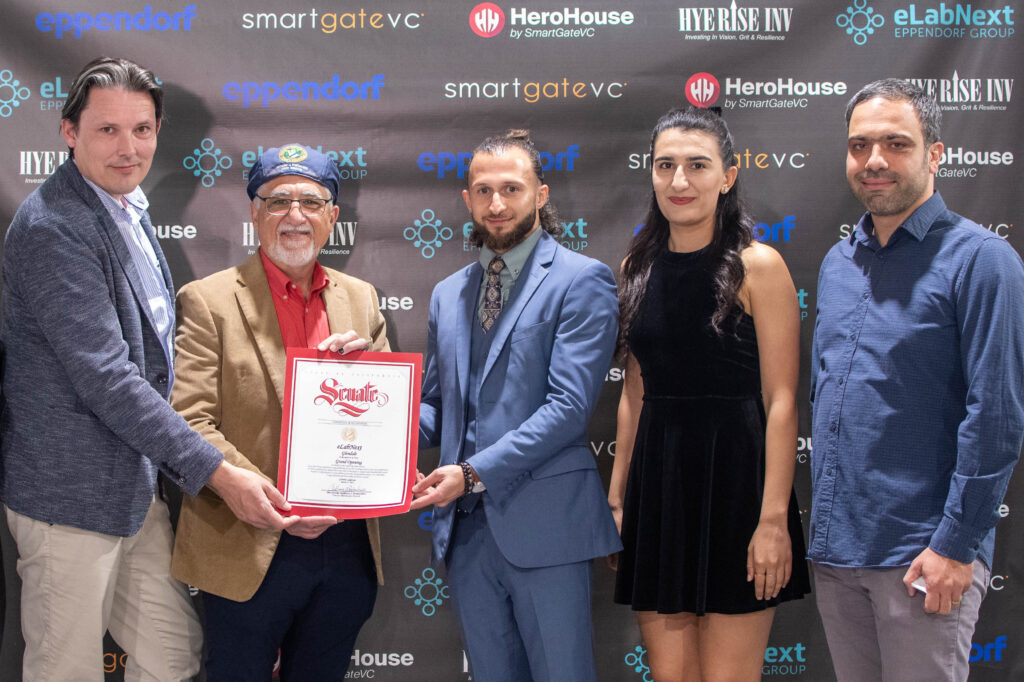
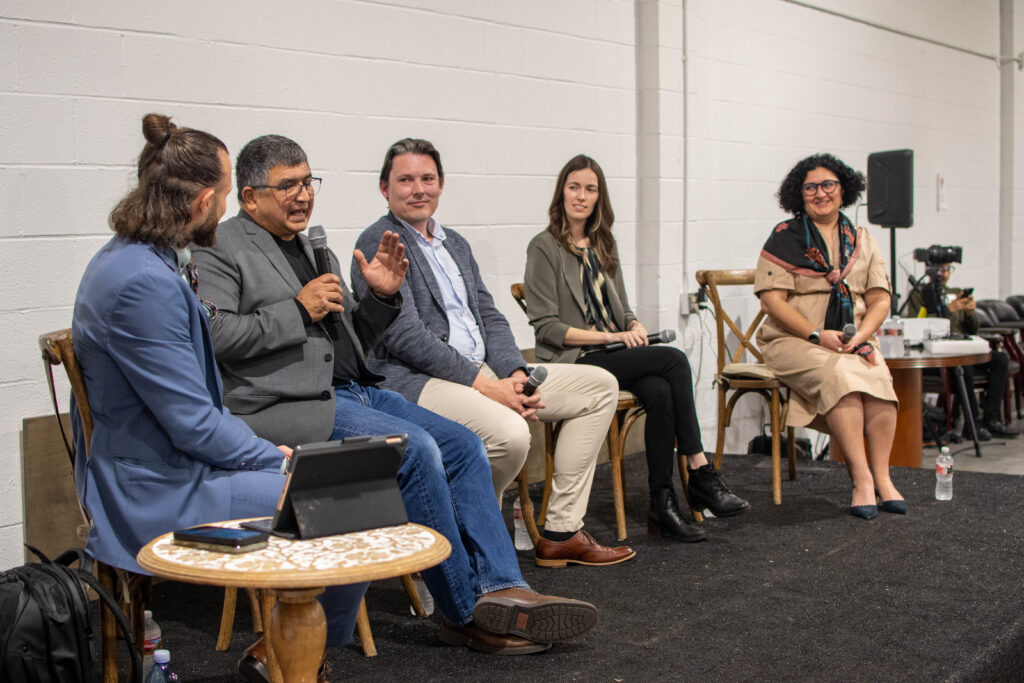
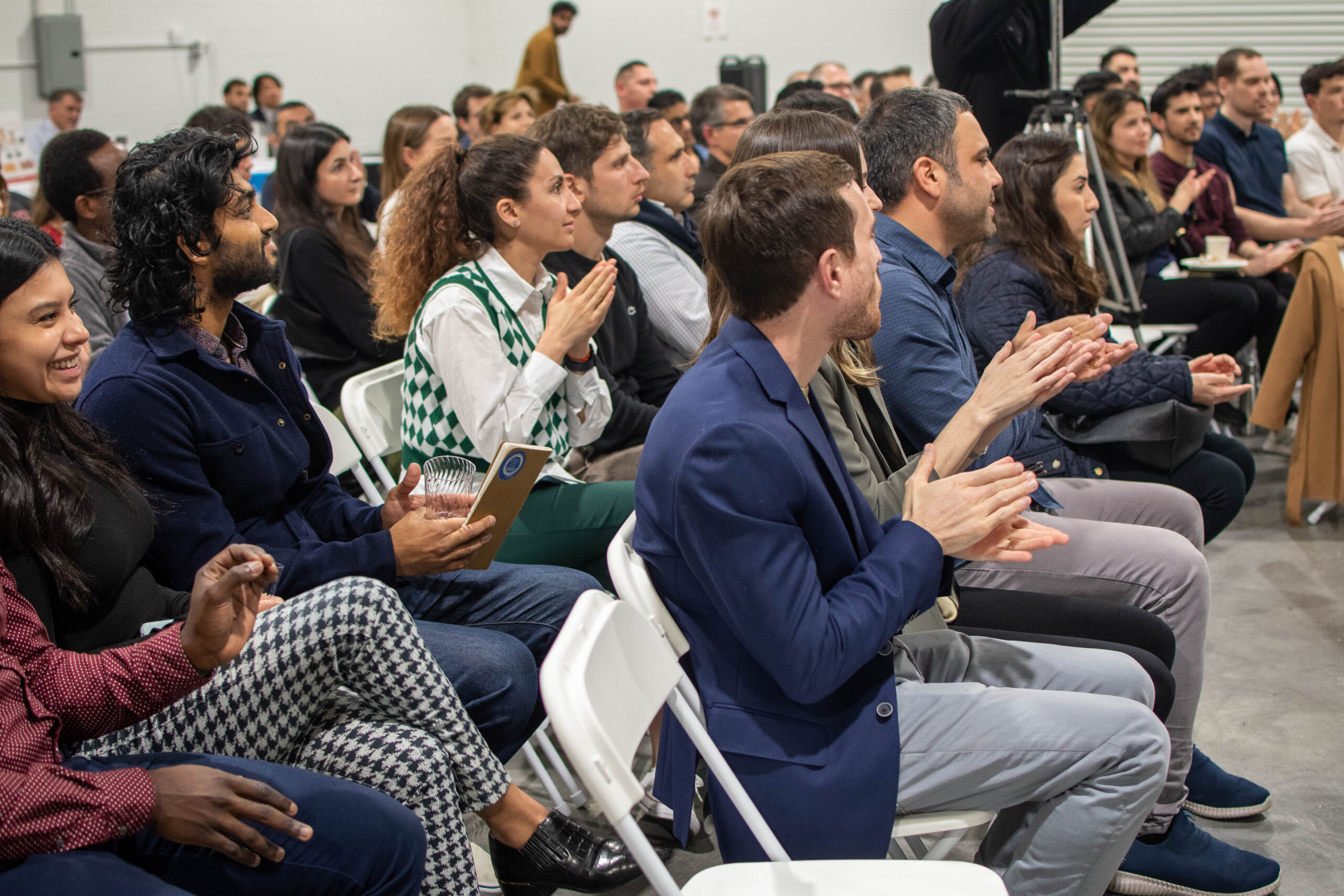
We are happy to share a recap of the panel discussion that took place during our new office opening in Glendale, CA, last month. The event was an excellent opportunity for attendees to network with the various booths, and we've provided highlights of each one so that you can reach out to them directly.

Pictured: Erwin Seinen, Anthony Portantino, Zareh Zurabyan, Armine Galstyan, Ashot Arzumanyan.

We'd like to take a moment to express our gratitude to SmartGate VC and Hero House for their warm hospitality and welcome. It's an honor to be part of such a vibrant AI ecosystem, and we're thrilled to be contributing our biotech expertise to it. We also extend a warm welcome to Mayor Ardy and Senator Portanito, who joined us to celebrate this exciting new chapter.

Pictured: Zareh Zurabyan, Mehdi Saghafi, Erwin Seinen, Taylor Chartier, Lucy Abgaryan.

Key Takeaways

  • The AI Revolution is happening as you read this, whether we like it or not, and those who prepare for it will benefit tremendously. Those that don’t will fall behind, especially in the biotech/pharma industry. This is also very closely related to the Academic and Healthcare industries.
  • Erwin Seinen, Founder of eLabNext
    • The development of new technologies is opening up new possibilities,
      demonstrated by this use-case of conservation efforts that include the
      potential to bring back extinct species.
    • The use of big data analytics and machine learning is playing an ever
      an increasingly important role in advancing scientific research.
  • Zareh Zurabyan, Head of eLabNext, Americas
  • Mehdi Saghafi, Bayer’s Principal Data Engineer
    • Implementing Digital Solutions is very simple; you need to have a very strategic approach to it right from the beginning, i.e. having timelines, and very specific goals of digitizing sample data, reporting data, and equipment data, and tackling them one by one, with agile project management. Learn about “Adoption Barriers and How to Overcome Them”.
    • Having an open ecosystem is necessary for a comprehensive and holistic solution for a large company like Bayer. There are many scientists, many operations, and many digital tools that are used. Having a connection between them is vital in ensuring efficiency and limiting any chance of data loss. Find out more.
  • Lucy Abgaryan, Founder of GrittGene and ProoneLabs
    • There is a shift from previous generations to new ones. It is essential to train your staff accordingly in the benefits of digitising your lab and being innovative and early adopters of new technologies, like AI. If you are a PI, a Research Tech, that is about to go on a digital journey, ensuring a proper training regimen and defining digital strategy right from the beginning is vital for success. Learn more about how Moderna does this.
  • Taylor Chartier, Founder of Modicus Prime
    • During a global recession, you can't afford to not invest in cost-saving technologies that will accelerate your research.  Empower your scientists with AI tools that will automate their workflows to achieve repeatable results faster.
    • Quality control over your research processes is just as important as the quality of your research product.  AI softwares make routine lab processes less burdensome and error-prone, giving scientists both structure and peace of mind as they conduct experiments that save time and resources formerly wasted on poor-quality studies.

LinkedIn Profiles

Featured Booths and Contact Information

CompanyContact InformationNikon Instrument, Inc.Junya Yoshika, Senior Scientist, junya.yoshika@nikon.com
Fumiki Yanagawa, General Manager, fumiki.yanagawa@nikon.com
Henning Mann, Business Development and Partnerships, henning.mann@nikon.comEppendorfLoreline Lee, Sales Director, lee.l@eppendorf.comImplen Inc.Austin Brazzle, Product Specialist, abrazzle@implen.comOhan Cardiovascular InnovationsVahagn Ohanyan, President, vohanyan@ohcvi.comBrinter Inc.Tom Alapaattikoski, CEO, tom.a@brinter.comMicroscapeJohn Francis, CTO and Co-founder, john@microscape.xyzPurpose BioLital Gilad-Shaoulian, CEO and Founder, lital@purposebio.comModicus PrimeTaylor Chartier, Founder and CEO, taylor@modicusprime.comAmaros AIBen Toker, Co-Founder/CTO, ben@amaros.aiOkomeraSidarth Radjou, CEO, sidarth.radjou@okomera.comMetaba A.EyePhilip Sell, CEO, events@metaba.us

Read More

ELN is de toekomst van labdigitalisering

Softwaresystemen als LIMS (laboratorium-informatiemanagementsysteem) en ELN (elektronisch labjournaal) verrijken de mogelijkheden om labs te digitaliseren. Die noodzaak wordt breed gevoeld in de labwereld, signaleert Margriet Mestemaker van eLabNext, inhakend op de toegevoegde waarde en actualiteiten als data-integriteit, dataveiligheid en AI ofwel kunstmatige intelligentie.

De mogelijkheden om laboratoria te digitaliseren nemen gestaag toe, met steeds meer functionaliteit in software-systemen, aldus Margriet Mestemaker, accountmanager Benelux bij eLabNext. LIMS en ELN worden beiden voor deze digitalisering gebruikt, al ziet ze wel verschillen. “Een laboratorium-informatiemanagementsysteem is vaak ‘stug’, vastgelegd voor een bepaald labproces met veel functionaliteit en weinig flexibiliteit. Een elektronisch labjournaal biedt juist veel flexibiliteit en mogelijkheden voor koppelingen met andere systemen, om een passende oplossing te customizen. Dat is volgens mij de toekomst van labdigitalisering.”

Paperless lab

Het ‘paperless lab’ is echter nog geen gemeengoed, volgens Mestemaker. “Iedereen gebruikt een smartphone en heeft geproefd van de digitale mogelijkheden. De labsector draait echter op structuur en routine en blijft daarom nog te vaak hangen bij papier. Labs die alles nog op papier doen zie ik niet veel meer, maar de huidige automatiseringsoplossingen zijn vooral hapsnap ingevoerd. Men zoekt nog naar één centrale plek waar de complete labworkflow digitaal is georganiseerd.” De labwereld wil dus één oplossing waar alles samenkomt, van inventarisbeheer, analyseplanning en dataverzameling tot kwaliteitscontrole en communicatie over de resultaten.

“De labsector blijft nog te vaak hangen bij papier”

Margriet Mestemaker van eLabNext

Overstap op LIMS of ELN

De uitdaging hierbij is dat de overstap naar een ELN- of LIMS-systeem meestal een verandering vergt. “Men zit dan nog vast aan een bepaalde werkwijze en eigen workflow: ‘We deden het altijd zo’. Daarom is het verstandig om met een open blik te kijken hoe men de workflow zo kan aanpassen dat het logisch past bij het nieuwe systeem. Ik zie vaak dat iemand in een trial met een nieuw systeem ervaart dat de bestaande manier van werken toch niet de meest praktische is.”

Witness signing

Natuurlijk is er behoefte om meer labhandelingen te automatiseren, maar zeker zo belangrijk is de compliance: zorgen dat die handelingen volgens de voorschriften worden verricht. Traceability is hier het sleutelbegrip, voor procesbeheersing, kwaliteitscontroles en toelatingsprocedures voor bijvoorbeeld een nieuw medicijn. Alles moet worden gelogd en navolgbaar zijn bij audits. Dat vraagt om vaste templates, gestructureerde workflows en borging van data-integriteit, aldus Mestemaker. Een digitaal hulpmiddel waarnaar steeds meer vraag komt is ‘witness signing’: het zetten van een digitale handtekening door een expert of toezichthouder, bijvoorbeeld voor akkoord op een protocol of afsluiting van een experiment, waarmee de data dan zijn vastgelegd. “Dit wordt tegenwoordig voor alle aspecten van het labproces gevraagd. Het beperkt bijvoorbeeld de vrijheid om af te wijken van de workflow en maakt datamassage een stuk lastiger.”

LIMS, ELN en dataveiligheid

Over data gesproken: zorgen over dataveiligheid leven breed in de labwereld, weet Mestemaker. Daarom zouden alle datacenters voor hosting van LIMS- en ELN-webapplicaties in de (publieke of private) cloud gecertificeerd moeten zijn voor informatiebeveiliging volgens ISO 27001. Gebruikers kunnen ook alles in eigen huis houden, op eigen servers, maar dat heeft niet haar voorkeur. “Die optie vind ik het minst veilig, omdat gebruikers dan zelf verantwoordelijk zijn voor cybersecurity, back-ups, enzovoort, terwijl dat niet hun core business is.”

“Een veelbelovende ontwikkeling, maar het heeft nog wel wat jaren nodig voordat het dagelijkse praktijk is”

Margriet Mestemaker van eLabNext

AI en big data

Uiteindelijk draait labdigitalisering om data, en dat worden er steeds meer. Kunstmatige intelligentie (AI) komt dan in beeld om uit big data zinvolle informatie te halen. Bijvoorbeeld uit meetresultaten correlaties tussen parameters afleiden of foto’s van celculturen snel analyseren. “Dit is een veelbelovende ontwikkeling, maar het heeft nog wel een aantal jaren nodig voordat het dagelijkse praktijk is op het lab.”

Voordelen labdigitalisering

Verandering kost tijd, weet Mestemaker, of het nu specifiek om de cloud of AI gaat of om automatisering en digitalisering in brede zin. “Dat is geen onwil, al is er wel sprake van enig conservatisme. Maar als voorlopers met fantastische resultaten komen, zal de rest snel volgen. Beschouw daarom positief-kritisch de workflows op je eigen lab, onderzoek de voordelen van een compleet digitaal labplatform en kijk vooral met een open blik naar labdigitalisering.”

________________________________________________

Flexibel platform voor ELN

Het gebrek aan automatisering en traceability in hun researchlab voor biotechnologie was in 2010 voor twee Groningse onderzoekers aanleiding om eLabNext te starten. Ze begonnen met inventarissoftware en dat groeide uit tot een platform voor labdigitalisering: elektronisch labjournaal, inventarisbeheer- en sample-trackingsysteem, labprotocolmanager en eLab Marketplace. De marktplaats bevat apps, ook van derden, voor koppeling aan de software van eLabNext om de functionaliteit verder uit te breiden. Dankzij de flexibele opzet is de software van eLabNext ook geschikt voor gebruik buiten de biotech R&D, bijvoorbeeld in een analytisch-chemisch lab. Het bedrijf is wereldwijd actief, telt bijna vijftig medewerkers en is nu onderdeel van laboratoriumleverancier Eppendorf.

Hans van Eerden

Lees op LabInsights

Read More